
Section outline
-
-
(OpenAI, 2026)
In simple terms, information resources refer to the places, people, or things from which information is gathered. These could be physical or digital documents, institutions, organisations, or even individuals. For example, books, research papers, online journals, and even experts in a particular field are all considered information sources. (Bawden & Robinson, 2012; Reitz, 2014). Why do we need to evaluate information sources?
- To avoid false misinformation
- Make informed decisions
- Do your research with confidence
- Think critically instead of accepting everything you read
CRAAP TEST
- C – Currency: Ask yourself - When was it created/ last updated. For fast-changing topics such as technology, science, health new information is usually more reliable
- R – Relevance: Ask yourself – Does the information answer your question? Is it written for the right audience (children, adults, experts)? Does it fit the purpose of your research?
- A – Authority: Ask yourself – Who created this information? Are they an expert? Is the publisher credible? For example: a medical article by a doctor is more reliable than one by an anonymous blogger?
- A – Accuracy: Ask yourself – Is the information supported by facts, data and citations?
- P - Purpose: Ask yourself - What is the purpose of the information? Is it to inform, teach, sell, entertain or persuade
(University of South Australia Library, 2017)
-
Evaluating Information on the Internet: Not everything on the Web is True!
Do you believe that everything you read is true? What about everything on the Internet? In a world where anyone can publish on the web, not all information is created equal. Much of the information you find on the Internet is reliable, accurate and true… but much of it is also biased, misleading and downright false. In the real world, parents, friends, education and experiences help us develop the ability to determine fact from fiction truth from lie. In situations where the line between truth and lies are blurred, we have developed an internal toolbox of tips and techniques to make educated guess about what to believe.
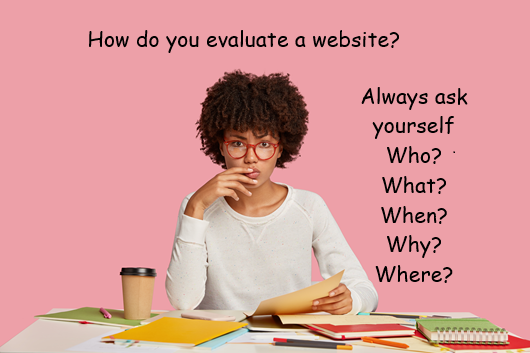
The 5 Ws of website evaluation
(OpenAI, 2026)
Who is the Author?
• Can you find the name of the author or creator?
• Are there any credentials? Degree, title, etc
• Is there contact information somewhere on the page?
• Is there a link to a homepage? Is it for an individual or for an organisation?
What can you tell from the URL?
• Can you tell anything about the source of the information from the domain name or URL?
• Can you find out more about the URL?
What is the purpose of the website?
• Does the site have one… if so, what?
• Is the site trying to inform, persuade, or sell?
• Is it geared to a particular audience?
Is the site objective?
• Is the site fact or opinion?
• Is the author's point of view objective and impartial?
• Is there an affiliation with an organisation? If so, is there some bias?
Is this information accurate?
• Can this information be verified? You may need to conduct some research to verify the information.
• Is there quality control? Are there spelling mistakes, grammatical errors, or typos?
Is the information reliable and credible?
• Would you bet your life on this information?
• What institution (company, government, university, etc.) supports this information?
• Can you verify this site with a non-web equivalent?
• Who does the site link to? And who links to the site?
Is the information current?
• Is the information current in nature?
• Can you find evidence of recent updates?
-
-
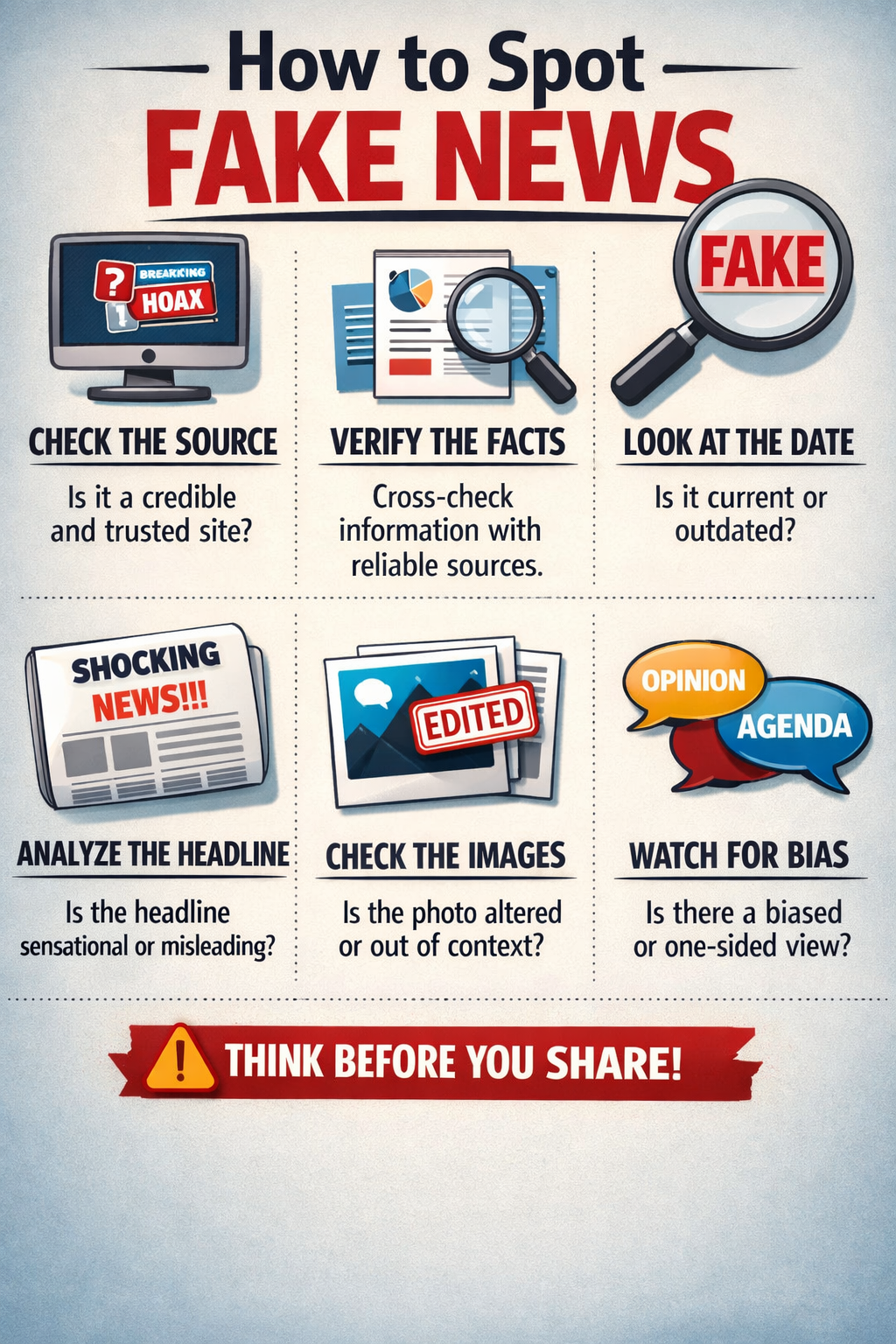
What is Fake News?
According to the Ethical Journalism Network, "Fake news is information deliberately fabricated and published with the intention to deceive and mislead others into believing falsehoods or doubting verifiable facts."
(OpenAI, 2026)
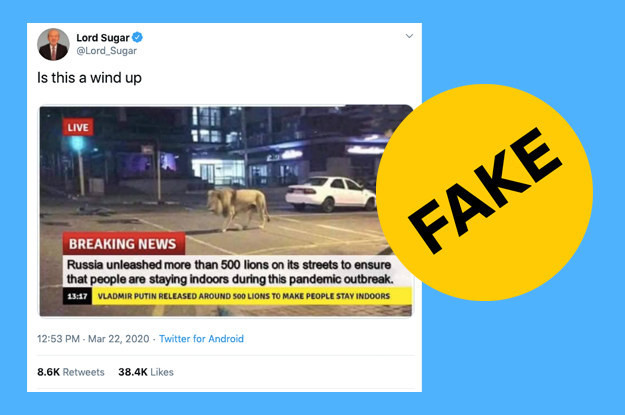
Check for any emotion that can be picked up from the image like is it instilling fear?
Use a reverse image application Reversely.ai - AI Reverse Image Search
Check details like the surroundings, the size of the lion and the car, and the shadows in the image
(Patel, 2020)
-