
Section outline
-
Plagiarism can be avoided through good academic habits and an understanding of how to credit your sources properly.
At NewBridge Graduate Institute, academic integrity is a key value — students are expected to complete all assessments honestly and to acknowledge the ideas, words, and data of others through correct referencing.
In this section you will find tips and resources to avoid plagiarism:
- Plan Your Work
- Paraphrase Effectively
- Quote Sparingly
- Reference Using APA 7 Style
- Tools to Help You
- NewBridge APA 7 Referencing Manual
-
Plan Your Work

Planning work before starting on assignments provides you with several benefits that will assist you throughout your journey here at NGI.
Improved Understanding of the Assignment - Breaking down the assignment prompt (command words, content words and actions required) into smaller parts helps you clarify requirements, identify key questions, and avoid misinterpretation. Here you can look for help early on should you not understand what needs to be done. This will result in fewer marks lost due to “missing the point” of the assignment.
Better Time Management - Creating a timeline or checklist prevents procrastination and last-minute rushes. All assignments at NGI are communicated to you well in advance. All assignments are released at the start of each semester, and depending on your specific modules, most completion times will range between 4 - 7 Weeks. Summative assessments (Hand-in Examinations) will be released 3 weeks before the set deadline. Remember, starting earlier on assignments means that you will get more sleep, have less anxiety, and often higher-quality work due to spaced effort.
Enhanced Focus and Efficiency - A plan acts like a roadmap—you will always know what to do next, to avoid any time wasted on trying to figure out what to do next. Having a plan in place helps you spend less time thinking about what needs to be done next, and instead helps you focus on what needs to be done in the moment.
Higher-Quality Work - Planning also allows time for research, drafting, and revision in stages. Remember all great word takes time, constant care and attention importantly the ability to think and revise on what has already been done. This also gives you the ability to ask for a consultation from your lecturer before the submission deadline. This will improve your overall grades and provide you with clarity.
Reduced Stress - Knowing what is expected of you, even during exam periods, lowers overall stress and anxiety. Remember better mental health will allow you to have sustained performance across all your subject.
-
Tools to Help You
Part of the resources you receive as a registered student at NGI is the full Microsoft Office 365 suite. Included in this suite is Microsoft Word. Within this application, it is very easy to already include your citations in the APA 7 format during the completion of your assignments.
How to use Word's built-in citation tools:Add a new source:
Click on the desired location in your document where you want the citation to appear.
Go to the References tab and click Insert Citation.
Select Add New Source.
In the "Create Source" dialog box, choose the Type of Source (e.g., book, website) and fill in the required details.
Click OK. The citation will be inserted into your document.

Insert an existing source:
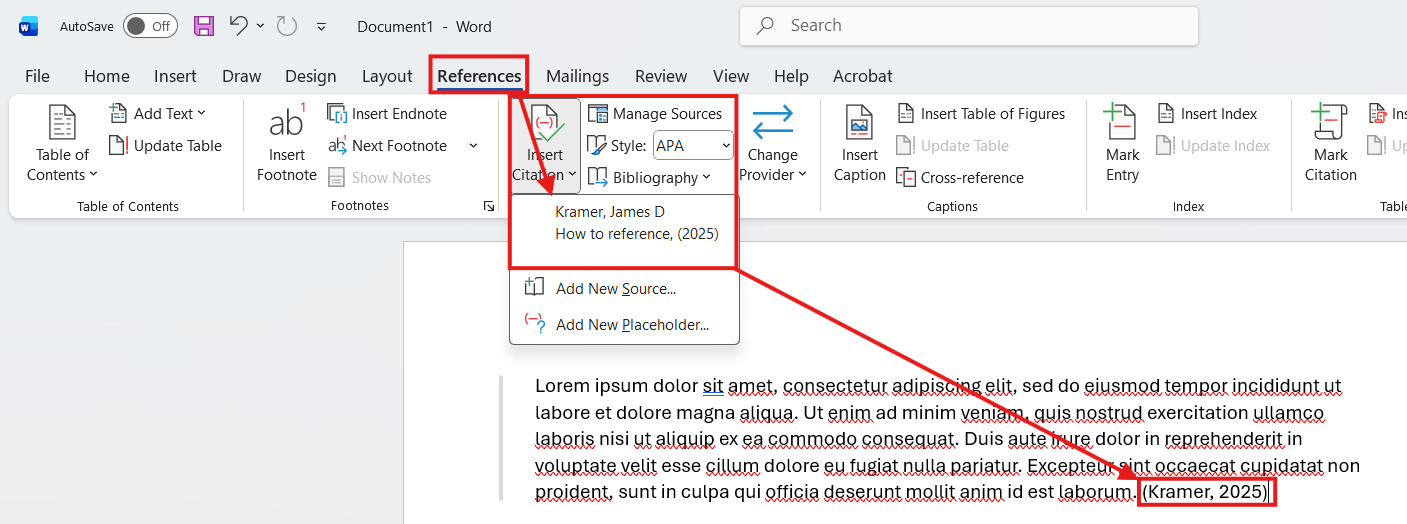
After you've added sources, place your cursor where you need a citation.
Go to the References tab and click Insert Citation.
Select the source you want from the drop-down list.
Create a bibliography:
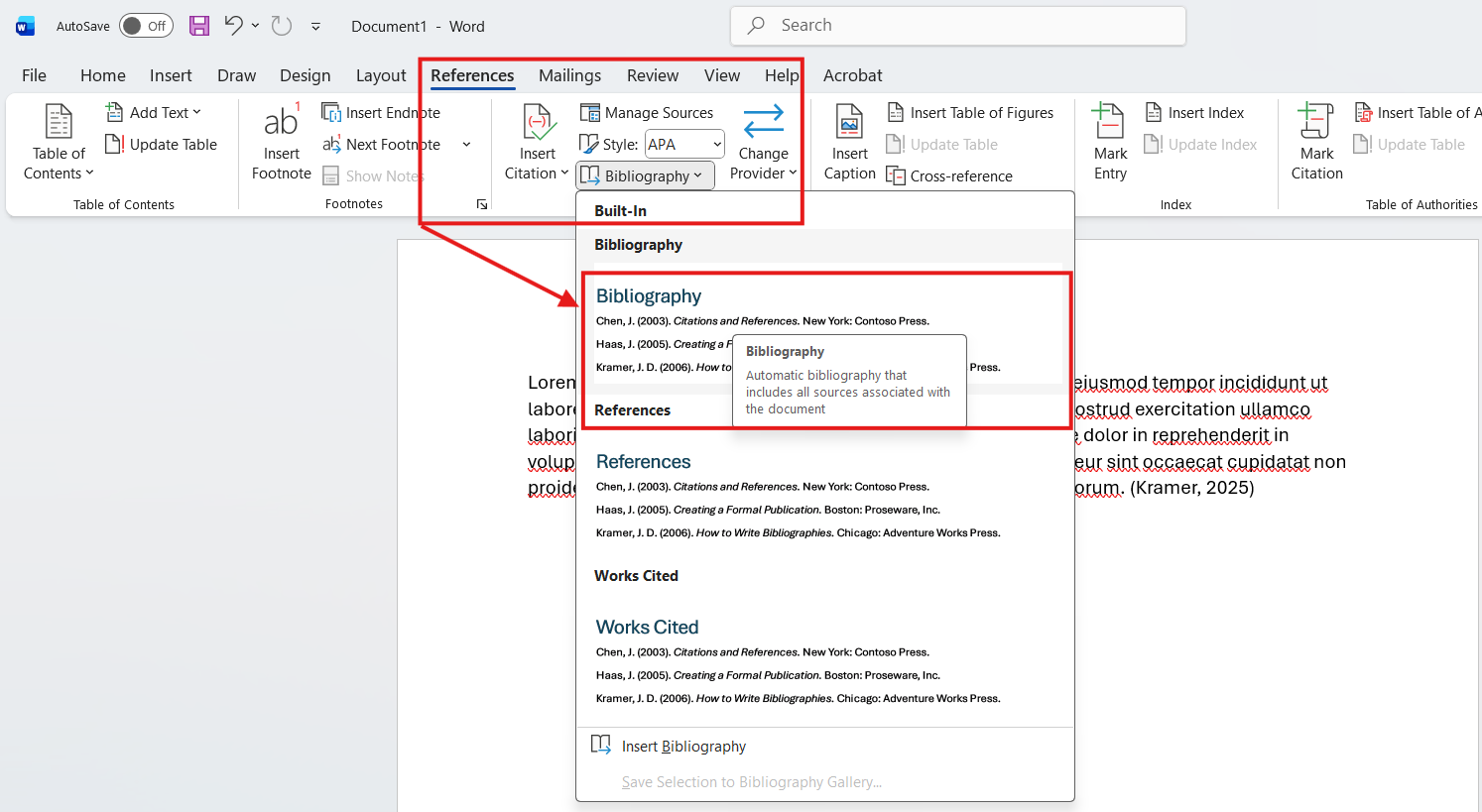
Place your cursor at the end of the document or where you want the bibliography to appear.
Go to the References tab and click Bibliography.
Select one of the automatic bibliography options. Word will compile a list of all sources you have cited in your document according to the style you've chosen.
Edit a source or citation:
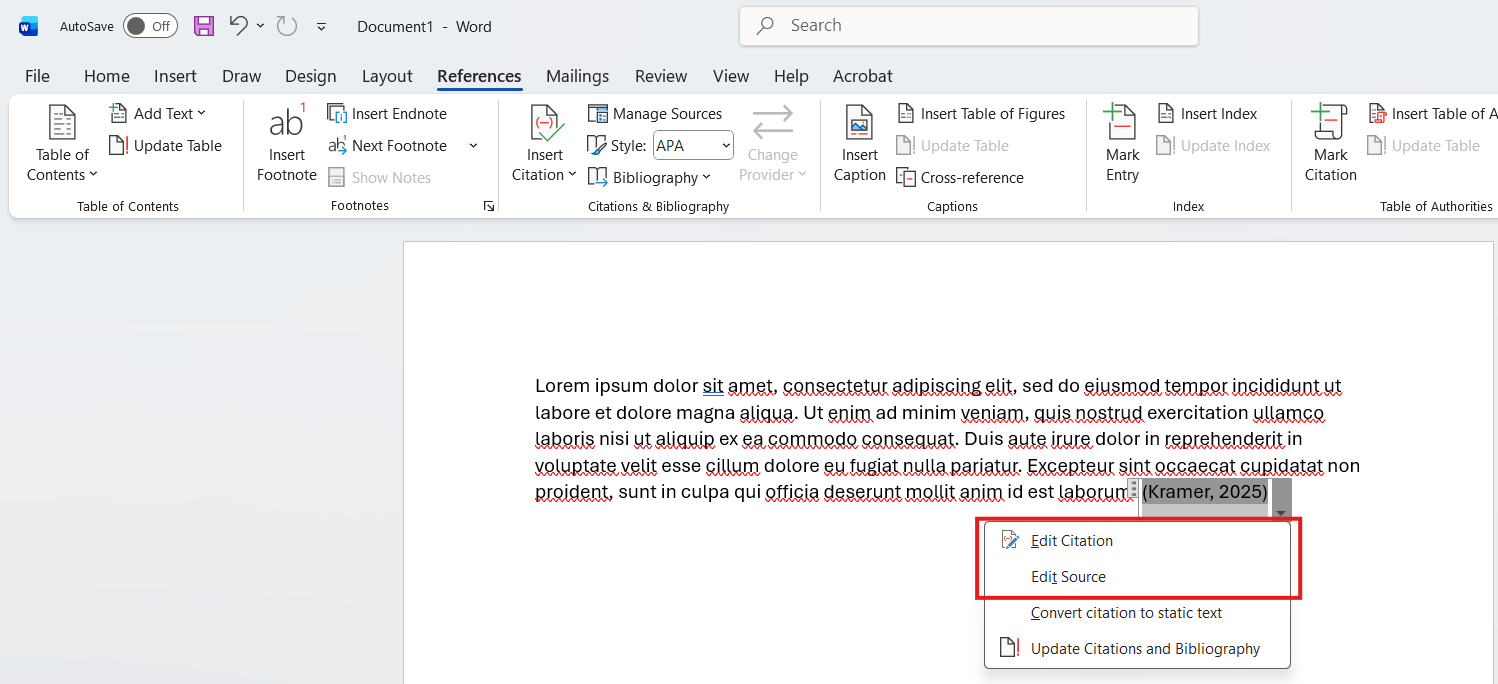
To edit the source details, click the citation in your document and select Edit Citation.
To edit the main source information, go to References > Sources or click the dropdown from an existing citation and select Edit Source
-
-
-